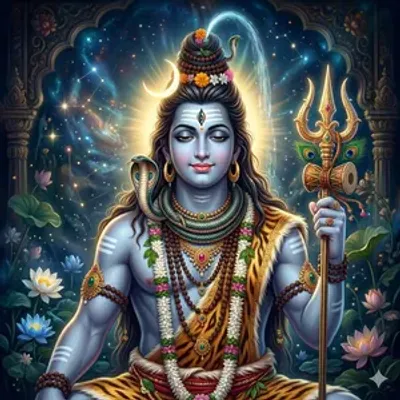
About Shiva
Lord Shiva, known as Mahadeva — the greatest of gods — is the destroyer of ignorance and the supreme yogi of the universe. His wisdom from the Shiva Sutras and Tantric traditions points seekers toward their own divine nature. Shiva represents stillness, transformation, and the eternal self beyond all change.
Topics You Can Explore
- Meditation and stillness
- Overcoming grief and loss
- Destroying ego and illusion
- Tantra and spiritual practice
- Anger and transformation
- Self-realisation
Frequently Asked Questions
How do I begin meditation according to Shiva?
Shiva, the Adi Yogi, teaches that meditation begins with becoming still — physically, then mentally. Sit upright, watch the breath without controlling it, and let thoughts pass like clouds without clinging. The Vijnana Bhairava Tantra offers 112 doorways into meditation; even one practiced sincerely opens the inner self.
What does Shiva teach about overcoming grief?
Shiva is the destroyer — not of people, but of the illusion that what we lose was ever separate from us. Grief is real, but so is the truth that the soul (Atman) is unborn and undying. Sitting with grief in meditation, without resisting it, transforms it into wisdom.
How can I overcome ego and pride?
Shiva teaches that ego is the illusion of being separate from the divine. Practices like daily self-inquiry ("Who am I beyond name and form?"), service without recognition, and remembering one's mortality dissolve pride naturally. The Shiva Sutra says: "Your true self is pure consciousness — nothing to defend."