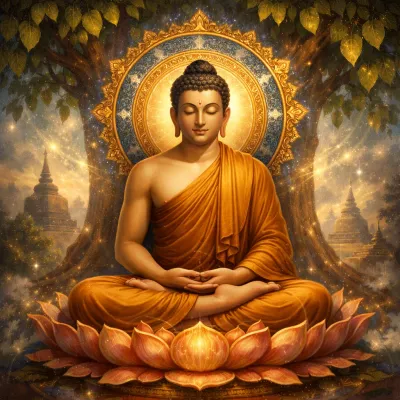
About Buddha
Siddhartha Gautama, the Buddha — the Awakened One — attained enlightenment under the Bodhi tree and spent 45 years teaching the path to liberation from suffering. His wisdom in the Dhammapada, Pali Canon, and the teaching of the Four Noble Truths remains the foundation of Buddhist practice worldwide.
Topics You Can Explore
- Mindfulness and meditation
- Anxiety and suffering
- Anger and attachment
- Depression and grief
- Relationships
- Finding inner peace
Frequently Asked Questions
What does Buddha teach about anxiety and depression?
The Buddha taught that suffering (dukkha) arises from craving (tanha) and the resistance to what is. Anxiety often comes from fearing the future; depression from refusing the present. Mindfulness (sati) — observing thoughts without identifying with them — gradually loosens both. The Dhammapada says: "Mind precedes all states; all are mind-made."
How do I begin Buddhist meditation as a beginner?
Start with Anapanasati: sit comfortably, close your eyes, and rest your attention on the breath at the nostrils. When the mind wanders (it will, hundreds of times), gently return. Ten minutes daily is enough to begin. The practice is not to achieve a special state, but to befriend your own mind.
What are the Four Noble Truths in plain language?
1) Life contains unavoidable suffering. 2) Suffering is caused by attachment and craving, not events themselves. 3) Suffering can end. 4) The Eightfold Path — right view, intention, speech, action, livelihood, effort, mindfulness, concentration — leads to its end. This is Buddhism's entire diagnosis and prescription.