About Zarathustra
Zarathustra (Zoroaster), the ancient Iranian prophet, founded one of the world's first monotheistic religions. His Gathas — composed in the Avesta — present a profound ethical vision centred on the triad of Humata (good thoughts), Hukhta (good words), and Hvarshta (good deeds) in service of Asha (divine truth).
Topics You Can Explore
- Good thoughts, words, deeds
- Choosing righteousness
- Fighting evil and darkness
- Fire and purification
- Free will
- Truth and justice
Frequently Asked Questions
What is the meaning of Humata, Hukhta, Hvarshta?
Zarathustra's threefold ethic — Humata (good thoughts), Hukhta (good words), Hvarshta (good deeds) — recognises that morality begins in the mind. A pure thought becomes pure speech; pure speech becomes pure action. Most ethical failures begin upstream, in unattended thoughts. Watch what you let your mind dwell on.
How does Zoroastrianism view the struggle between good and evil?
Zarathustra was the first to teach a clear cosmic dualism: Ahura Mazda (the Wise Lord) versus Angra Mainyu (the destructive spirit). But the battlefield is the human heart, and humans have free will. Every choice — to speak truth or lie, to help or harm — is a small victory in the cosmic struggle.
Why is fire sacred in Zoroastrianism?
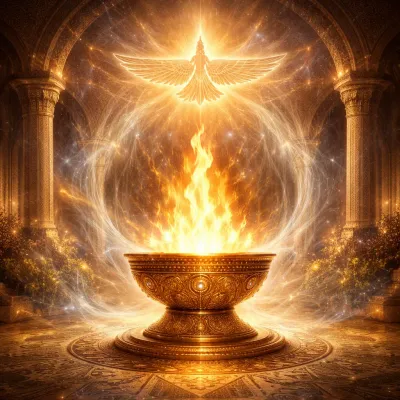
Fire (atar) symbolises Asha — divine truth, light, purity. Zoroastrians do not worship fire but face it during prayer as a focal point of the divine presence. Fire transforms whatever it touches without itself becoming impure. The teaching: live in such a way that contact with you purifies others, like fire.